
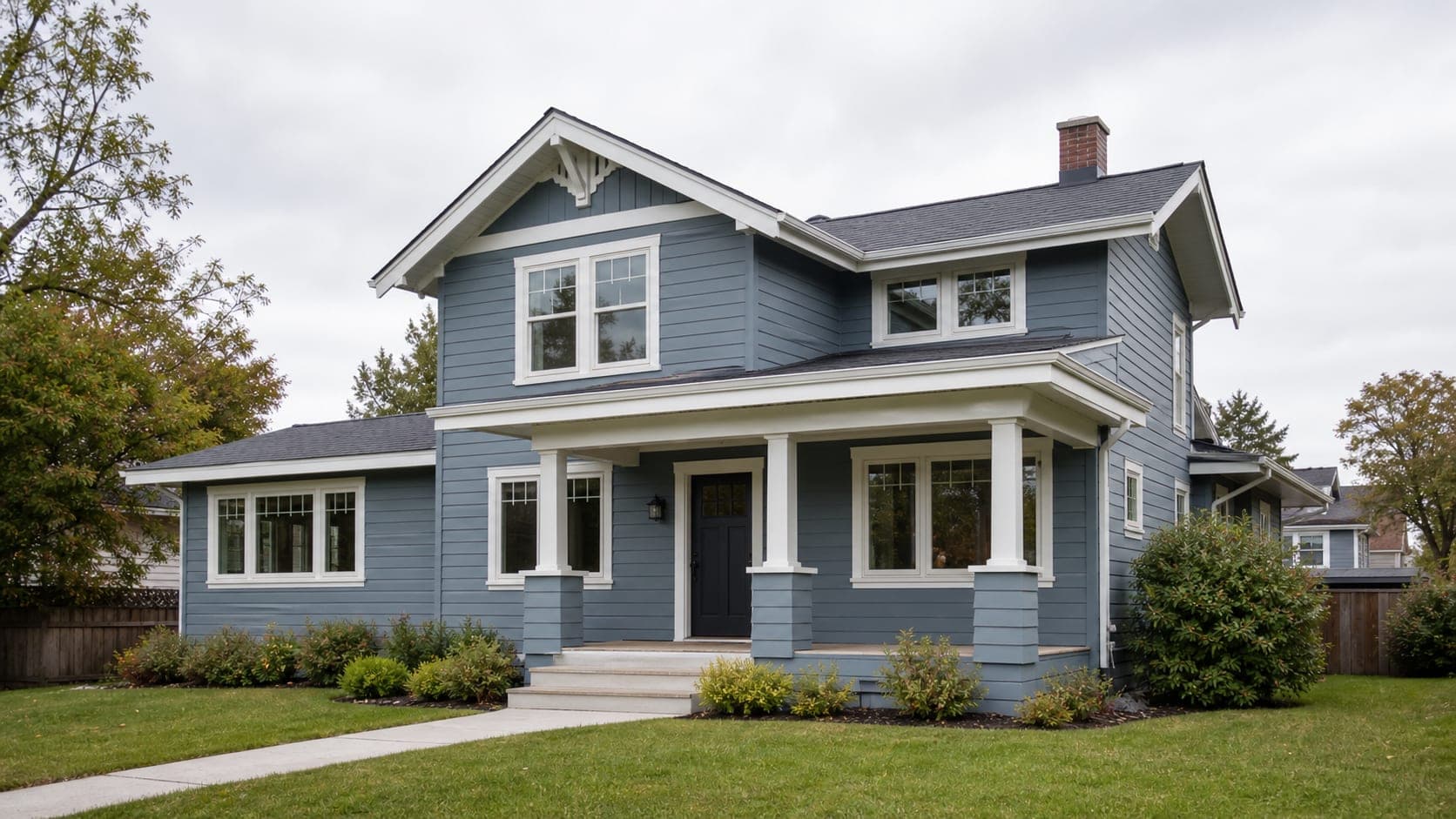
Exterior House Painting in St. Louis, MO
Wash · Scrape · Prime · Two Finish Coats · Rot Repair Included
Exterior Painting
A repaint that survives a Missouri summer and a Missouri winter
St. Louis exteriors take 95° humidity in July and freeze-thaw cycles from November on. That combination finds every un-caulked joint and every skipped primer coat. Revolve Construction repaints home exteriors across the metro and Southern Illinois — wash, scrape, sand, prime, caulk, and two finish coats — and repairs the rotted trim and failed siding we find along the way.
Why homeowners and businesses trust Revolve
Rot and repairs handled in-house
We're a siding and exterior contractor, so soft fascia, split trim, damaged soffit, and cracked siding get replaced properly before paint — not filled with caulk and covered up.
Coatings matched to the substrate
Wood, fiber cement, vinyl, stucco, and brick each want a different primer and finish system. Vinyl especially — the wrong color LRV will warp a panel in a single summer.
Weather-window discipline
We watch dew point and surface temperature, not just the forecast. Paint applied outside the manufacturer's window fails early no matter how good the product was.
What we offer
Full Exterior Repaints
Siding, trim, soffit, fascia, porch ceilings, columns, shutters, and doors on one scope.
Wood & Fiber Cement Siding
Scraped, sanded, spot-primed, and finished with coatings rated for the substrate and exposure.
Brick & Masonry Painting
Mineral and elastomeric systems for painted brick, block, and stucco — breathable where it needs to be.
Vinyl Siding Painting
Vinyl-safe colors and bonding primers that won't cause heat distortion on south-facing walls.
Trim, Soffit & Fascia
Rot repair and replacement plus finish painting, coordinated with gutter and roof-edge work.
Decks, Fences & Railings
Cleaned, brightened, and stained or sealed with penetrating products built for horizontal exposure.
Related Services
Painting
Interior and exterior painting from a licensed St. Louis exterior contractor.
Siding & Exteriors
When repainting isn't the right call — replacement siding options and honest math.
Fascia & Soffit
Rotted fascia and soffit replaced before finish coats, not caulked over.
Interior Painting
Whole-home interior repaints with drywall repair and texture matching.
Vinyl Siding
Why vinyl needs vinyl-safe colors — and when replacing beats painting.
What St. Louis Weather Does to Exterior Paint
Missouri gives an exterior finish a genuinely hard time. July humidity and 95-degree surface temperatures on a south-facing wall, UV exposure that chalks pigment, driving spring rain, and then a winter of freeze-thaw cycling that works water into every hairline gap and expands it. Paint that was applied over a dirty surface, without primer on bare wood, or outside the manufacturer's temperature and dew point window does not survive that. It peels, and it usually starts on the south and west elevations.
That is why our exterior process is front-loaded. Pressure or soft wash to remove chalk, dirt, mildew, and pollen. Scrape and sand every failing edge back to sound material. Spot-prime all bare substrate — bare wood, in particular, must be primed or the finish coat has nothing to bond to. Remove and replace failed caulk at joints, trim, and penetrations rather than caulking over it. Then two finish coats, applied when surface temperature and dew point actually allow.
Different Substrates Want Different Systems
Wood siding and trim need a flexible, breathable system with a quality primer on any bare area, and it needs the caulk joints maintained or water gets behind the finish. Fiber cement holds paint extremely well but requires the right primer on cut edges and factory-primed surfaces. Stucco and masonry need breathable, alkali-resistant coatings — trapping moisture behind an impermeable film on masonry causes spalling, not just peeling.
Vinyl siding is the one that catches people. Vinyl expands and contracts with heat, and painting it a color darker than the original — technically, with a lower light reflectance value than the manufacturer allows — makes it absorb more heat and warp permanently. Vinyl-safe color lines exist specifically to solve this, and we use them. A painter who tells you any color is fine on vinyl is going to cost you a siding job.
Brick is a one-way door. Painted brick can look excellent, but it cannot practically be returned to unpainted, and it takes on a maintenance cycle that unpainted brick does not have. We will walk you through that trade-off honestly before you commit.
Rot, Trim, and the Repairs That Come First
On most exterior repaints we find something: soft fascia behind a gutter, split window casing, rotted door trim, a section of siding that failed at a butt joint, or soffit damaged by water coming off a bad roof edge. A painting-only contractor either paints over it or tells you to hire someone else, which stalls the project.
Revolve Construction is a siding, gutter, and roofing contractor. We replace the fascia, rebuild the trim, swap the damaged siding, and correct the roof-edge detail causing the problem, then paint. It is the same crew, the same schedule, and one line-item estimate rather than two contractors pointing at each other.
Coordinating exterior painting with gutter, soffit, and roof work also saves real money — the setup, staging, and access are the same. If any of that work is coming due in the next couple of years, it is worth pricing together. Call (314) 400-8006 for a free walkthrough.