
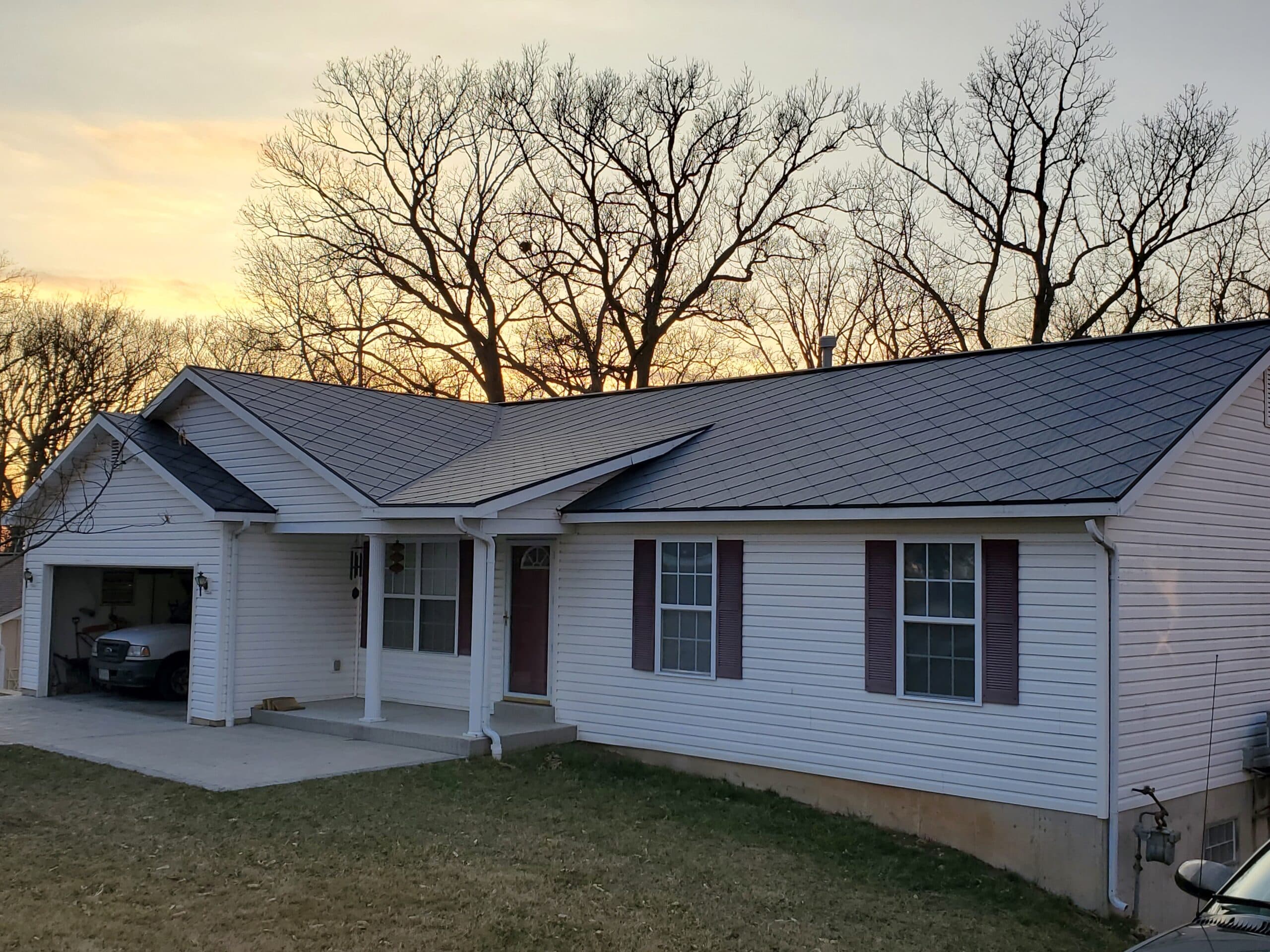
Fascia & Soffit Installation in St. Louis, MO
Aluminum Fascia Wrapping · Vented Soffit · Attic Ventilation
Gutters · Fascia & Soffit
The foundation your gutters hang from — and the ventilation your attic depends on
Fascia boards and soffit panels are the unsung components of every residential exterior — overlooked until they fail, but critical to both the structural integrity of the gutter system and the thermal performance of the attic. The fascia board is the board the gutter attaches to. In most St. Louis homes, the fascia is painted wood that has been slowly degrading behind the gutter for decades — absorbing moisture where the gutter back-connects, where leaves dam against it, and where ice dams during cold snaps push meltwater back up. When a gutter is rehung, pulled away, or replaced, the condition of the fascia is exposed. Installing a new gutter on rotted fascia creates a callback within two seasons as the fasteners pull through the degraded wood. Revolve wraps rotted or damaged fascia boards with pre-formed aluminum coil stock — a permanent solution that encapsulates the wood, eliminates the rot source, and provides a clean, paint-free substrate for the new gutter. Soffit panels — the panels on the underside of the roof overhang — serve two functions: they close the rafter tail cavity for pest exclusion, and when vented, they provide the critical intake airflow that balanced attic ventilation requires. Pairing fascia wrapping and soffit replacement with gutter or roof projects is the standard Revolve approach — coordinating the work once is always more efficient than returning for component replacements piecemeal.
Why homeowners and businesses trust Revolve
Aluminum fascia wrapping — permanent rot encapsulation
Pre-formed aluminum coil stock bent to the fascia profile and installed over the existing wood board creates a waterproof, paint-free surface that ends the rot cycle without requiring full fascia board replacement in most cases. Gutters attach to the aluminum wrap and hold permanently.
Vented soffit for balanced attic ventilation
The soffit is the intake side of the balanced ventilation equation. Vented soffit panels provide the low-point airflow that ridge and box vents exhaust — without adequate soffit ventilation, ridge vents are ineffective. Revolve specifies vented soffit where the intake-to-exhaust ratio requires it.
Paired with roof and gutter projects for efficiency
Fascia and soffit work almost always surfaces during roof or gutter replacement. Scheduling it alongside a larger project avoids a second mobilization, allows coordinated installation, and ensures the full exterior assembly is renewed at the same time.
What we offer
Aluminum Fascia Wrapping
Pre-formed aluminum coil wrapped over existing fascia boards — covering rot, eliminating paint maintenance, and providing a solid gutter attachment surface. Available in all standard colors.
Vented Soffit Panels
Perforated aluminum soffit with intake vent area sized for the attic ventilation requirement. Coordinates with ridge vent and box vent exhaust for balanced airflow.
Solid Soffit Panels
Non-vented aluminum soffit for areas where ventilation intake comes from other sources — appropriate for garages, porch soffits, and additions.
Fascia Board Replacement
When wood fascia is beyond wrapping — active rot through to the rafter tail or full structural degradation — Revolve replaces the board before wrapping for structural integrity.
Coordinated Gutter + Fascia + Soffit
Complete eave renewal — new soffit, aluminum fascia wrap, and seamless gutter — as a single coordinated project. The most efficient way to renew the full eave system.
Post-Roof Inspection
Fascia and soffit condition is assessed as part of every roof replacement project — damage noted and replacement quoted before the new roof is installed.
Related Services
The Fascia Problem: Why Gutters Pull Away From St. Louis Homes
The most common gutter failure mode in the St. Louis market is not the gutter itself — it is the fascia board the gutter is attached to. On the typical St. Louis home, the fascia behind the gutter has been slowly degrading for years: absorbing moisture where the back of the gutter holds it against the wood, where leaf dams accumulate behind clogged gutters in the fall, and where ice dams in winter push meltwater behind the gutter into the wood grain. By the time the gutter starts pulling away from the house, the fascia is soft, spongy, and unable to hold fasteners.
Rehung gutters on rotted fascia produce a callback within one to two seasons — the fastener pulls through the degraded wood and the gutter drops again. The correct approach is to address the fascia before the new gutter goes up. Revolve wraps rotted or moisture-damaged fascia boards with pre-formed aluminum coil stock — a technique that encapsulates the existing wood, creates a waterproof substrate, and provides a dimensionally stable surface for new gutter attachment.
Aluminum fascia wrapping is not a cosmetic operation — it is a functional one. The aluminum wrap provides the solid, non-degrading attachment surface the gutter needs, ends the moisture absorption cycle that was degrading the wood, and creates a maintenance-free surface that never requires painting. The wrap is installed before the new gutter is hung and the gutter attaches to the aluminum, not to the wood beneath.
Vented Soffit and Attic Ventilation: The Connection Most Homeowners Miss
The soffit panels on the underside of the roof overhang serve two functions that most homeowners do not connect: they close the rafter tail cavity against pest entry, and when perforated or vented, they provide the critical intake airflow for balanced attic ventilation. The relationship between soffit ventilation and roof performance is direct: without adequate soffit intake, ridge vents do not function as designed, attic temperatures rise, and shingle lifespan is shortened.
Most building codes require 1 square foot of net free ventilation area (NFA) per 150 square feet of attic floor area, split approximately equally between intake (soffit) and exhaust (ridge or upper-roof vents). When existing soffit panels are solid — or when perforated panels are partially blocked by attic insulation that has migrated to the eave cavity — the ventilation system is effectively half-functional regardless of how much ridge vent is present.
Revolve specifies vented soffit with sufficient NFA to balance the exhaust vent capacity in every project where soffit replacement is in scope. This calculation is part of the ventilation assessment that accompanies every roof replacement project — and it is often the correction that makes an existing ridge vent system actually work.
Coordinating Fascia, Soffit, and Gutter Work: The Efficiency Case
Fascia and soffit replacement almost always surfaces as a need during a roof replacement or gutter project. The alternative — deferring it to a separate mobilization — means a second project setup charge, a second scheduling wait, and the awkward situation of having new gutters or a new roof with aging fascia and soffit that will require attention within a few years anyway.
The efficiency of coordinating the work is significant. When the roof is off, fascia condition is fully visible and accessible. When the gutters are being replaced, the fascia is already exposed. Fascia and soffit replacement during either project saves substantial staging and access time. Revolve proactively identifies fascia and soffit condition at every inspection and quotes the coordinated work as part of the primary project scope — so the homeowner can make a single decision rather than managing multiple future projects.
Typical project combinations in the St. Louis market: new seamless gutters plus aluminum fascia wrap plus gutter guards as a single exterior eave renewal project; new roof plus vented soffit plus fascia wrap plus ridge vent as a complete roofing system renewal; or all of the above combined when the project involves the full exterior of an older home.