
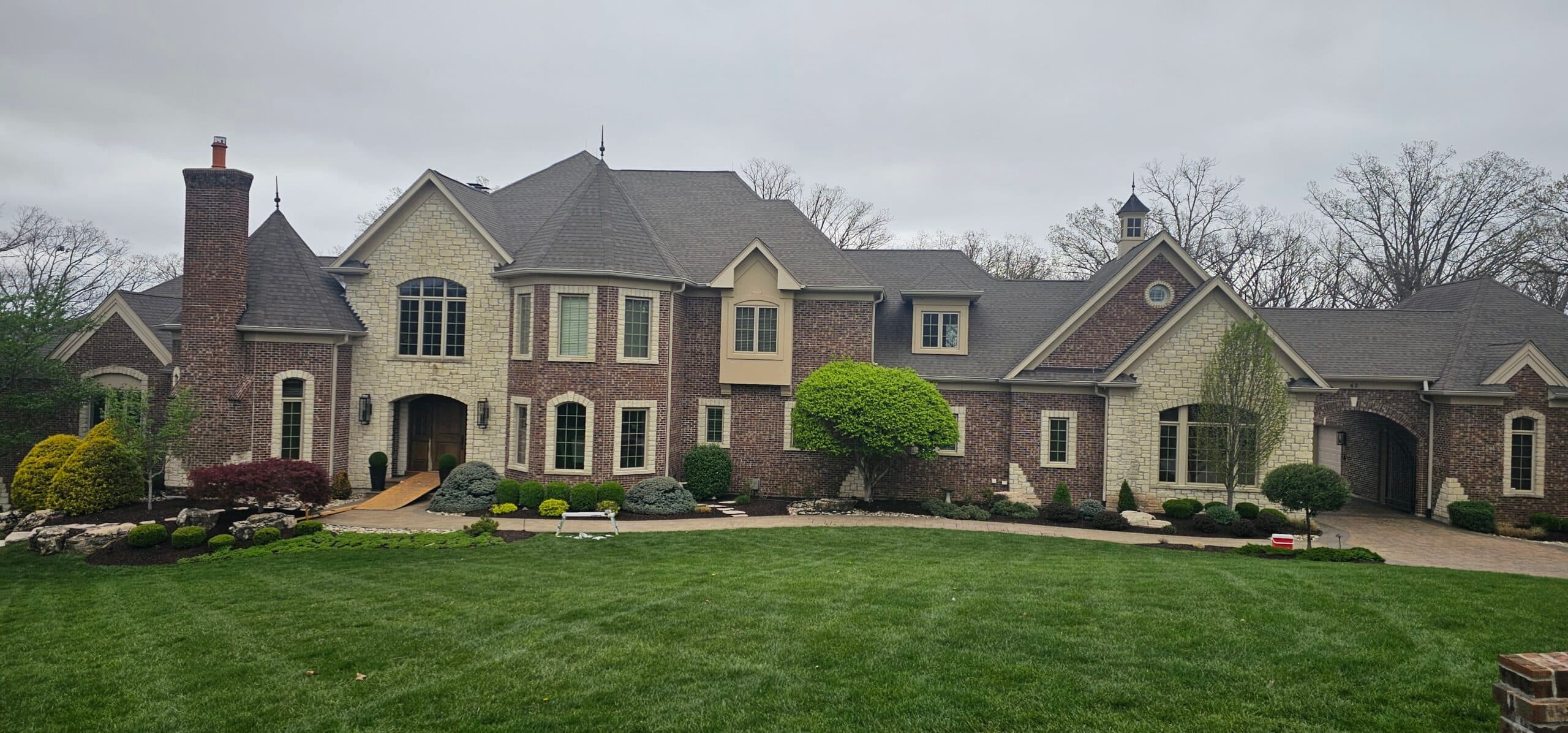
Emergency Roof Tarping in St. Louis, MO
24/7 Storm Response · Water Intrusion Prevention · Insurance Documentation
Storm Damage · Emergency Tarping
24/7 response — water out, documentation in, claim started before the storm clears
When a storm tears off shingles, displaces ridge caps, or punches through a roof deck, every hour before tarping is an hour of water intrusion into the attic insulation, the ceiling drywall, and the wall cavity below. Revolve Construction operates a 24/7 emergency tarping service for the St. Louis metro — dispatching crews to active storm damage situations during and immediately after significant hail, wind, and tornado events. Emergency tarping is not a temporary patch. Done correctly, it is a comprehensive water intrusion prevention measure that protects the interior of the home while the insurance claim and full repair process proceed — which can take days to weeks depending on adjuster scheduling, permit requirements, and material availability. Correctly installed emergency tarping uses heavy-duty polyethylene tarps secured to the deck with furring strips, not weighted down with sandbags or draped loosely over the ridge. The tarp installation must seal at all edges, discharge water away from the damaged area, and be secured against the wind events that frequently follow major storms. Critically, emergency tarping costs are reimbursable under most homeowners insurance policies as a loss-mitigation measure. Revolve documents the tarping installation with time-stamped photographs, provides the homeowner with a written record of the damaged area covered, and includes tarp installation in the insurance documentation package from the first day of the claim.
Why homeowners and businesses trust Revolve
Deployed during and after storms — not just the next business day
Revolve's 24/7 emergency line is staffed during active St. Louis storm events. We dispatch tarping crews the same night or next morning after a major storm — not when the regular schedule allows it. Water waits for nobody.
Properly secured tarps — not weighted-down plastic
Tarps secured with furring strips anchored to the deck resist wind uplift and seal edges against water entry. Tarps laid loosely over the ridge and weighted down blow off in the first post-storm wind gust. Revolve installs tarps to a standard that protects through subsequent weather.
Reimbursable under most policies — documented from day one
Most homeowners insurance policies cover emergency tarping as a loss-mitigation expense. Revolve documents every installation for the insurance claim, including photos of the damaged area, tarp coverage, and installation method.
What we offer
24/7 Emergency Dispatch
Emergency line staffed during St. Louis storm events. Call (314) 400-8006 for same-event or next-morning response.
Heavy-Duty Polyethylene Tarping
Professional-grade tarps secured with furring strips — not weighted plastic. Installed to hold against post-storm wind events common in Missouri.
Insurance Documentation Package
Time-stamped photos, written damage description, and coverage area documentation included with every tarp installation for immediate use in claim filing.
Interior Water Damage Assessment
After tarping, Revolve assesses accessible interior areas for water intrusion evidence — important documentation for claim scope completeness.
Claim Filing Support
We initiate or support the insurance claim process from the tarping visit — so your claim is active while water is kept out.
Full Repair Scheduling
Tarping is step one. Revolve queues the full repair or replacement scope while the tarp is in place, so the transition from temporary protection to permanent fix is seamless.
Related Services
Storm Damage & Insurance Claims
Full storm damage restoration and insurance claim handling — hail, wind, and tornado.
Hail Damage Repair
Hail damage inspection, documentation, and insurance claim support in St. Louis.
Tornado Damage Repair
Emergency tarping, structural assessment, and full restoration after tornado events.
Why Emergency Tarping Is Not Optional After a Roof Event
When hail, wind, or a tornado tears through a residential roof, the clock starts on interior water damage. Missouri thunderstorms do not come alone — the storm that strips shingles from a roof on a Tuesday afternoon is frequently followed by more rain Wednesday and Thursday. Every hour the roof is open is an hour of potential water intrusion into attic insulation, ceiling drywall, wall cavities, and the building envelope below.
Water damage to insulation is immediate and difficult to reverse — saturated fiberglass or cellulose loses R-value and becomes a mold substrate within 48 to 72 hours in Missouri's warm seasons. Ceiling drywall begins to sag and fail within 24 hours of sustained water contact. Wall cavity moisture creates long-term mold risk that is expensive to remediate and frequently not covered at full cost under insurance policies because it is classified as secondary damage from delayed mitigation.
Revolve operates a 24/7 emergency tarping service specifically because the window between storm event and preventable secondary damage is measured in hours, not days. We dispatch crews the same night or first morning after a major storm event — not when the regular schedule opens up.
How Professional Tarping Works: Method Matters
Emergency tarping done incorrectly is almost as bad as no tarp. Tarps weighted with sandbags or laid loosely over the ridge blow off in the first post-storm wind gust — which is common in Missouri's weather pattern, where major storms are followed by secondary wind events as the system clears. A tarp that blows off at 2 AM when no one is watching has provided no protection.
Revolve's tarping protocol uses heavy-duty polyethylene tarps (12 mil or heavier) secured with dimensional furring strips nailed through the tarp and into the decking at the ridge and at lateral intervals. The tarp edges are wrapped and secured to create a sealed perimeter rather than a loose drape. The installation is designed to withstand the sustained wind conditions that typically follow Missouri storm events.
Critical tarp installation details: the tarp must extend well past the eave line and be secured at the eave so water discharges away from the wall, not back into the soffit cavity. It must cover all exposed deck areas, not just the most visible damage. Every penetration — chimneys, vents, skylights — must be incorporated into or worked around in the tarp installation to prevent secondary entry points.
Insurance Reimbursement: Documenting Tarping for the Claim
Emergency tarping is a covered loss-mitigation expense under most homeowners insurance policies. The key documentation requirements are: evidence of the original damage event (date, storm correlation), photographs of the damaged area before tarping, photographs of the completed tarp installation showing coverage area and installation method, and an itemized cost record.
Revolve documents every tarping installation for immediate use in the insurance claim: time-stamped photographs of the damaged area before and after, written description of the coverage area, installation method notation, and an itemized invoice. This package is prepared as a standard step — not as a separate service — because it is the foundation of the claim that pays for the permanent repair to follow.
The tarping cost is typically submitted as a line item in the full insurance scope — not as a separate claim. Revolve coordinates the tarping documentation with the full damage assessment so the entire scope — emergency mitigation plus permanent repair — is submitted together.