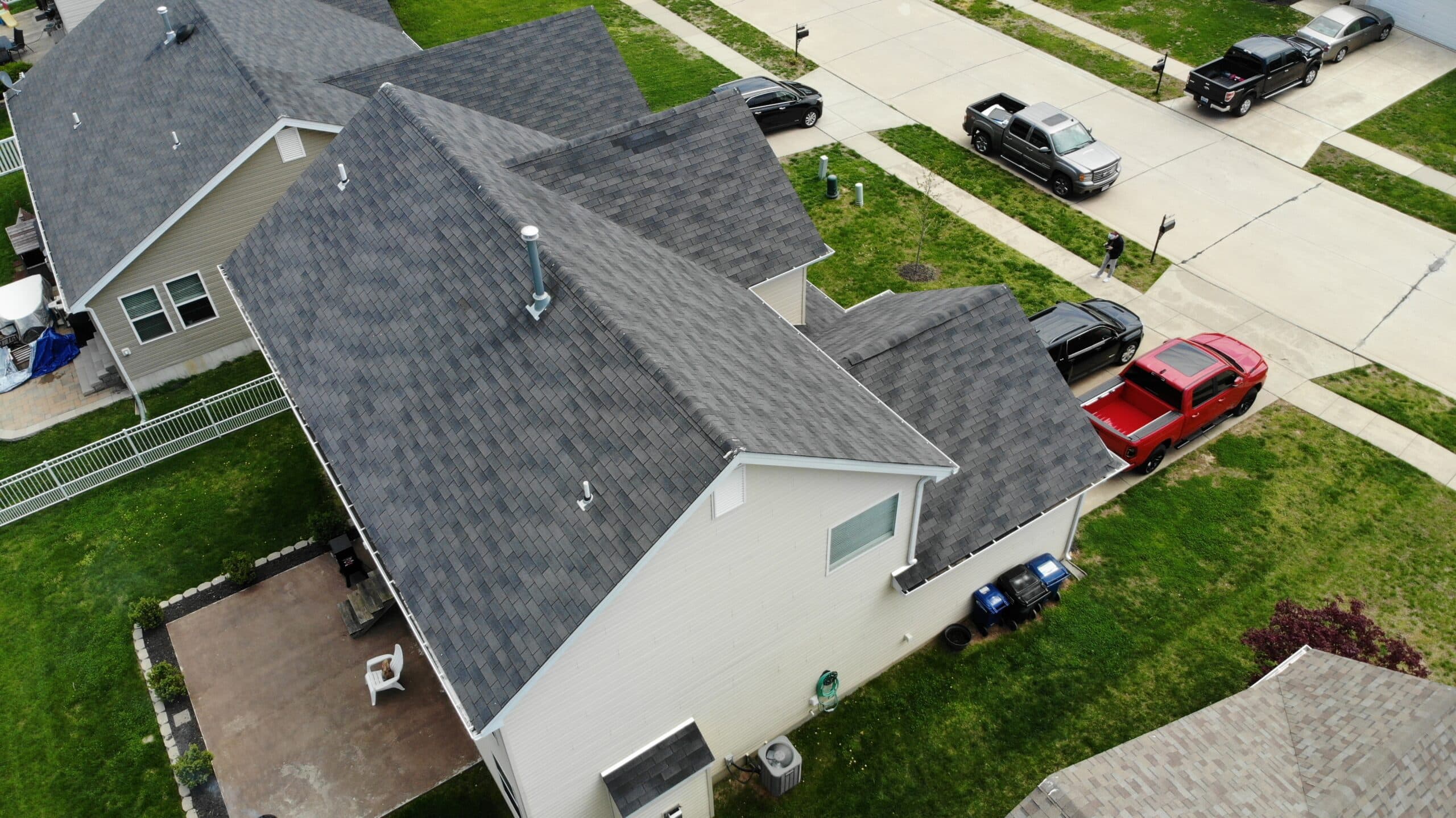
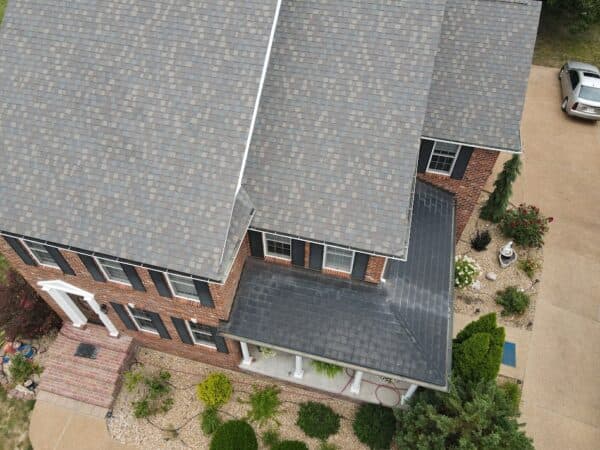
Asphalt Shingles

Roof Repair vs. Replacement in St. Louis: How to Decide After Hail or High Winds

When you live in the St. Louis metro, you learn to read the sky. One night it’s quiet over Kirkwood; the next, a line of storms drops quarter-size hail over Florissant and sends tree limbs across Clayton. Add our humid summers and winter freeze–thaw, and you’ve got a roof that works hard year-round. If your shingles lifted in last week’s wind, or you’re spotting a brown ring on the bedroom ceiling, the big question lands fast: fix it or replace it? Revolve Construction has been helping St. Louis families answer that question since 2008—with plain-spoken assessments, code-smart installations, and zero scare tactics.

St. Louis weather reality: why roofs fail here

St. Louis sits in a clash zone for Gulf moisture and Midwest cold fronts. Spring through early summer is our busy season for severe weather; that’s when strong updrafts can produce storm damaging and straight-line winds. The National Weather Service office in St. Louis even tracks hail climatology for Missouri and Illinois to help forecast risk, underscoring how often hailstones become a factor here. And statewide climatology notes that roughly 60% of Missouri’s thunderstorms occur May through August, which aligns with the calls we get from Chesterfield to Soulard. 

Hail size matters. As a rule of thumb, 1-inch (quarter-size) hail meets the severe threshold, and that’s often where shingle bruising and fractured mats start to show up, especially on older roofs. The National Weather Service’s hail size chart is what many spotters and adjusters use to keep terminology consistent.

Wind is the other culprit. Gusts peel up the leading edges of shingles, breaking the sealant bond; repeated lift can crease tabs and open pathways for water. In winter, quick thaws refreeze overnight, creating ice along eaves and in gutters. That freeze–thaw cycle can push water under shingles and into soffits if the roof edge, flashing, or ventilation is marginal.

The first 72 hours after a storm (and when to tarp)

If you suspect damage, here’s the calm path that keeps you protected and makes any future claim easier:

  • Stay safe—no climbing. Photograph the ground-level clues (shingle granules at downspouts, dented gutters, torn screens).
  • Control interior moisture. If a ceiling is wet, poke a small hole through the paint bubble with a screwdriver and set a bucket—controlled drains beat random blowouts.
  • Call for an inspection and tarp if needed. Revolve offers free same-day roof inspections and 24/7 emergency tarping. A clean, professionally anchored tarp prevents additional damage and shows you acted in good faith while you evaluate next steps.

We’ll arrive with fall protection, camera documentation, and a checklist tuned to hail and wind damage in our region. If we find open seams, missing shingle strips, exposed fasteners, or punctured vents, we stabilize first—rain doesn’t wait for paperwork.

Repair vs. replace — a simple, plain-spoken framework

You don’t need a ladder to get a straight answer. These are the levers we look at, and we’ll walk them with you at the kitchen table.

1) Age & condition. Architectural asphalt shingles on St. Louis homes commonly last 18–25 years, but that range tightens with poor ventilation, lots of shade, or recent storm history. If granule loss is heavy in the valleys, if the shingle mats feel brittle at the edges, or if the deck shows soft spots along eaves, you may be paying for repeated leak chases. In those cases, replacement is often cheaper over a five- to ten-year horizon than patch-work repairs.

2) Scope & recurrence. One lifted ridge cap or a popped nail under a boot vent? That’s a classic repair. Leaks showing on multiple ceilings, or a history of “we fixed that corner last year” calls? That points to systemic issues—aging underlayment, tired flashing, or design gaps—that a reroof solves in one controlled project.

3) Storm severity & pattern. Hail leaves a pattern that pros can recognize: bruises that feel soft to the touch, fractures in the shingle mat, granule craters exposing asphalt. Wind leaves creases and broken seals. If quarter-size hail hit your block, we’ll check ridge caps, vents, and the windward slopes first; if it was golf-ball size in parts of St. Charles, we’ll evaluate more aggressively for cracked mats and dented metals. Again, the NWS size chart keeps “quarter” and “golf ball” language consistent. [NWS hail size reference].

4) Code, ventilation, and “if we’re opening it anyway.” When a roof is stripped, that’s the right time to fix attic ventilation and edge details. Building codes call for minimum ventilation ratios (commonly 1 square foot of net-free vent area per 150 square feet of attic, with a 1/300 exception when certain conditions are met). Balanced intake at the soffit and exhaust at the ridge helps shingles run cooler in summer and reduces winter moisture.

5) Budget & timing. If your roof is mid-life and damage is localized, repair is sensible. If it’s late-life and storm-hit across multiple slopes, replacement compresses future risk into one scheduled project. Either way, we’ll show line-item options so you can weigh the cost of recurring calls versus a full reset.

Mini case study: 1950s ranch in Kirkwood after a hail cell (hypothetical)

A homeowner off West Essex Ave in Kirkwood calls the morning after a spring squall. Neighbors mention “quarter-to-ping-pong” hail overnight. From the ground we see granules washing at the downspouts and a dented mailbox—good clues without climbing.

Day 0: Our inspector documents shingles, ridge caps, pipe boots, and box vents. The north and west slopes show 8–12 hail bruises per test square, with a few torn tabs near the hip. The attic has light staining near a bath fan but no active drip. We tarp the ridge and one penetration before the afternoon rain.

Day 1–3: We share photos and a written assessment, then meet the adjuster on site. We compare hail size to the NWS chart language to keep everybody aligned. The adjuster agrees the windward slopes and ridge are compromised.

Week 2: The owner chooses architectural shingles with a high-wind nailing pattern and upgraded underlayment at valleys and eaves. Because we’re opening the roof, we also rebalance ventilation with continuous soffit intake and a low-profile ridge vent to meet the IRC ventilation ratio. The project passes inspection, and gutters get re-pitched to cure a chronic overflow at the back patio. Total on-site time: two days, plus one for gutters. The leak ring on the hall ceiling never returns.

Materials that make sense in the STL metro

Architectural asphalt shingles (the neighborhood standard). They balance cost, curb appeal, and installation speed. If you’re in a hail-prone pocket of St. Louis County or St. Charles County, impact-resistant (IR) shingles are worth a look. Independent testing from the Insurance Institute for Business & Home Safety (IBHS) digs deeper than the familiar UL 2218 classification, focusing on how shingles perform under more realistic hail impacts—useful context when you’re deciding on an upgrade. 

Underlayment and edges. We recommend a self-adhered ice-and-water membrane at eaves, valleys, and around penetrations—especially important with our freeze–thaw swings along the Missouri and Mississippi river bluffs.

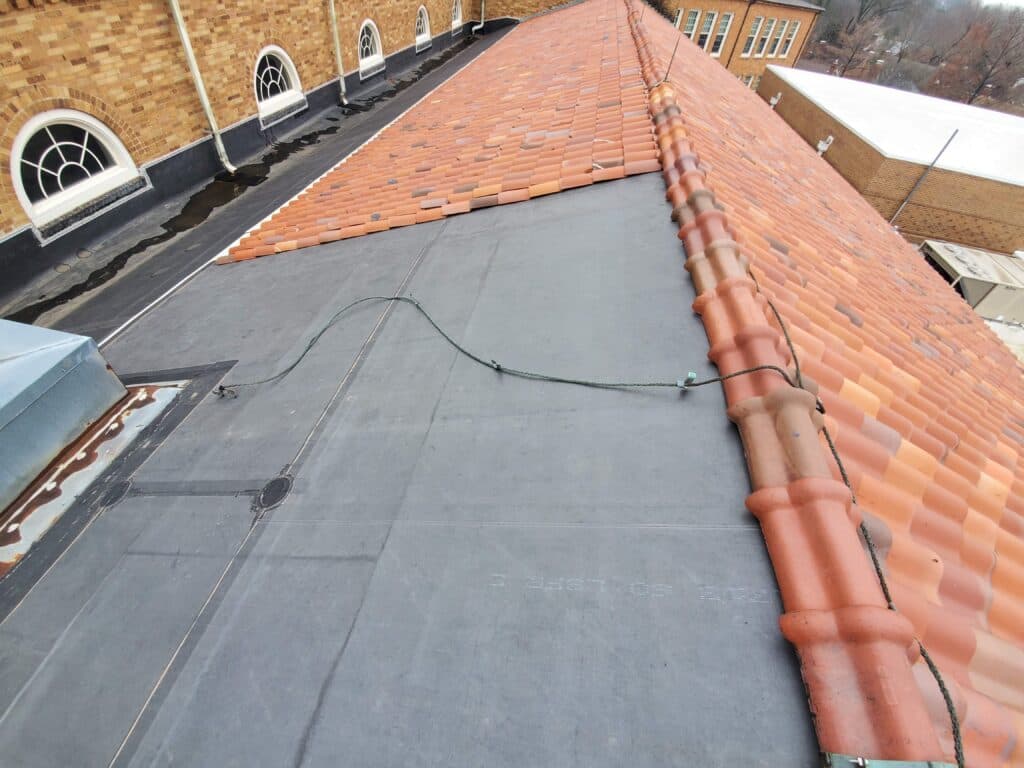
Flat sections and light commercial roofs. For small businesses in Maplewood or mixed-use buildings in Central West End, single-ply systems (TPO or EPDM) handle ponding and foot traffic better than shingles. Tapered insulation adds slope to stubborn flat areas, and properly sized scuppers/outlets keep water moving during those intense summer downpours.

Ventilation and heat. A balanced system—soffit intake paired with ridge exhaust—keeps shingle temps reasonable in July and helps purge attic humidity after those August storms that leave the air feeling like soup. Again, the 1/150 (or 1/300 exception) framework is our code baseline, not a sales add-on. 

Permits, inspections, and “will this pass?” across the metro

Permitting and inspections vary across the St. Louis metro. St. Louis County publishes a Residential Re-Roofing Checklist that outlines when a permit is required—for example, certain low slopes, sheathing replacement over set thresholds, or material changes. Commercial reroofs have their own triggers. We follow these rules so you don’t have to memorize them. 

Inside the City of St. Louis, the Building Division explains that permits are required for structural changes and major alterations; routine maintenance may not need a permit. During our pre-construction walkthrough, we’ll confirm whether your scope involves permitting and arrange inspections around weather so your project stays on track. 

Bottom line: we’re pragmatic. If a permit is required, we pull it, schedule inspections, and build to pass the first time.

Insurance & documentation — guidance, not legal advice

We’re not lawyers, and we don’t promise outcomes. What we do is document thoroughly, meet adjusters on time, and keep your home weather-tight while decisions are made. In Missouri, consumer guidance notes that insurers must acknowledge receipt of a claim within 10 working days—that doesn’t mean approval, but it’s a helpful timing benchmark so you’re not wondering if your notice was received. We’ll show you how to organize photos, keep receipts for emergency tarping, and prepare a clean, line-item scope. 

If you decide to file, call your carrier promptly, then let us coordinate a joint site visit so everyone sees the same roof, from CWE ridge caps to that stubborn valley over your Soulard addition.

How Revolve Construction (Since 2008) handles your project

Our process is simple and neighborly:

  1. Free same-day inspection. We check shingles, flashing, decking from accessible points, and the attic when safe.
  2. Straight options. If a repair is smart, we say so. If a replacement is wiser, we’ll explain why in photos and plain English.
  3. Code-conscious scope. We plan ventilation, underlayment, and edge details to meet code and St. Louis County/City/St. Charles realities.
  4. Safe jobsite, tidy finish. Harnesses on, magnet sweep after. We respect driveways in Clayton as much as loading zones behind small shops on Manchester.
  5. Follow-through. We’re still here after the storm headlines fade. We’ve been at this since 2008, fully licensed and insured.

FAQ

How big does hail need to be to damage a roof?

Quarter-size (1-inch) hail marks the severe threshold and can bruise or fracture aging shingles, especially on windward slopes and ridge caps. Bigger stones increase risk. 

Do I need a permit to replace my roof?

It depends on location and scope. St. Louis County’s Residential Re-Roofing Checklist spells out triggers like certain slopes, sheathing replacement percentages, or changing materials; the City of St. Louis requires permits for major alterations. We’ll confirm and handle the paperwork. 

What if I only see a small stain inside?

Small stains can come from a single fastener hole or a larger flashing issue. We’ll trace it, moisture-meter it, and advise whether a targeted repair or a bigger fix is smarter.

What’s the 1/150 vs. 1/300 ventilation thing?

It’s code math for attic airflow. Minimum is typically 1 square foot of net-free vent area per 150 square feet of attic; a 1/300 exception applies when certain conditions are met, and we balance intake at soffits with exhaust at the ridge. 

Are impact-resistant shingles worth it here?

If your area repeatedly sees hail (many in West County and St. Charles do), IR shingles can reduce damage risk. IBHS research compares how shingles actually perform under more realistic hail impacts—useful when choosing. 

How fast should I call my insurer after a storm?

Quickly. Document first, then notify. Missouri consumer guidance says insurers must acknowledge your claim within 10 working days; that’s not legal advice or a guarantee, just a timing guardrail. We can share your photos and scope to keep things organized. 

Ready for a straight answer?

Whether you’re in Central West End, Chesterfield, or across the river in St. Charles, Revolve Construction will give you a clear, same-day inspection and a no-pressure plan. If a tarp is needed, our 24/7 emergency team is on it. If a repair solves it, great. If a replacement is smarter, we’ll show you why—photos, code notes, the works. Book your free storm-damage assessment today and let’s protect your home the right way—neighbor to neighbor, since 2008.

How Hail Can Damage Your Roof Without Causing a Leak

When a hailstorm rolls through your area, the first thing most property owners check for is obvious damage — broken windows, dented siding, or water leaking from the ceiling. If everything looks fine on the surface, it’s easy to assume your roof survived unscathed.

But here’s the catch: hail damage isn’t always immediate or visible, and just because your roof isn’t leaking now doesn’t mean everything is okay.

At Revolve Construction, we’ve inspected thousands of roofs across Missouri and Illinois after severe storms. Time and again, we find that hail damage flies under the radar — until it’s too late and costly repairs are needed.

In this guide, we’ll break down exactly what hail does to your roofing system, why leaks may not show up right away, and why it’s critical to take action even if your roof looks fine.

How Hail Actually Damages a Roof

It’s More Than Just Dents

While hail can cause noticeable dents and cracks, some of the most serious damage happens beneath the surface. A standard hailstone may not seem like much, but when it slams into your roof at 60+ mph, it can compromise the system’s integrity.

Here’s how:

  • Bruising of Shingles: Hail impacts can bruise or compress the protective granules on asphalt shingles, exposing the underlayment to the elements.
  • Cracks or Splits: For older roofs, hail may cause cracking or splitting of shingles and tiles.
  • Loss of Granules: Granules provide UV protection and fire resistance. Hail can knock them off, speeding up aging.
  • Membrane Punctures: On flat roofs (like TPO or EPDM), hail can puncture or weaken the membrane, even without visible tears.

Why You Might Not See Leaks — Yet

Delayed Water Intrusion Is Common

One of the biggest misconceptions is that if your roof isn’t leaking immediately after a hailstorm, it must be fine. In reality, hail damage often sets the stage for leaks that can develop weeks, months, or even years later.

Here’s why:

  • Protective layers are compromised, but not fully breached — yet.
  • Small cracks or gaps allow slow moisture intrusion that builds up over time.
  • UV exposure worsens damage where granules have been knocked away, accelerating decay.
  • Interior leaks can be hidden inside walls, insulation, or attics before becoming visible.

Signs of Hail Damage to Watch For

Even if you’re not seeing leaks, keep an eye out for these warning signs:

  • Dark or bald spots on shingles
  • Dents in gutters, downspouts, or metal flashing
  • Loose or missing shingle tabs
  • Cracked skylights or vent covers
  • Granules collecting in gutters

And remember: if your neighbors are getting inspections or repairs, there’s a good chance your property was affected, too.

Why Timely Inspections Matter

The longer you wait to address hail damage, the more expensive it becomes. Insurance companies also limit how long you have to file a claim after a storm — typically 6 to 12 months.

Benefits of Getting a Roof Inspection Right Away:

  • Catch damage early before it leads to interior problems
  • Protect your insurance rights by filing on time
  • Get professional documentation for your claim
  • Prevent small issues from becoming major repairs

At Revolve Construction, we provide free hail damage assessments — no pressure, no gimmicks. Just honest insights from trained professionals.

TPO, EPDM, and Shingle Roofs: How They Respond to Hail

Roof Type

Common Hail Damage

How It Progresses

Inspection Tip

Asphalt Shingles

Granule loss, bruising, cracks

UV exposure worsens damage

Look for dark or smooth patches

TPO Membrane

Surface dents, seam separation

Can lead to leaks over time

Check seams and around penetrations

EPDM Rubber

Punctures, uplifted edges

May bubble or blister later

Look for signs of membrane loosening

Still Not Sure If You Have Damage? Ask Yourself:

  1. Did a hailstorm pass through your area recently?
    If yes, even a quick inspection is worth it.
  2. Is your roof more than 5 years old?
    Older roofs are more vulnerable to hail damage.
  3. Have neighbors filed claims or gotten repairs?
    Nearby damage usually means yours was impacted too.
  4. Can you see granules in your gutters or downspouts?
    This could signal hail has stripped the shingles.

Final Thoughts

Hail damage doesn’t always cause immediate leaks — but that’s exactly what makes it dangerous. Left unaddressed, even minor hail impacts can lead to major water damage, mold growth, and costly repairs down the road.

At Revolve Construction, we help property owners take the smart, proactive approach. Our trained inspectors know exactly what to look for — and how to document damage clearly for insurance claims.

Think your roof might have hail damage? Don’t wait for the first drip to take action.

Contact Revolve Construction today for a free inspection — and peace of mind