
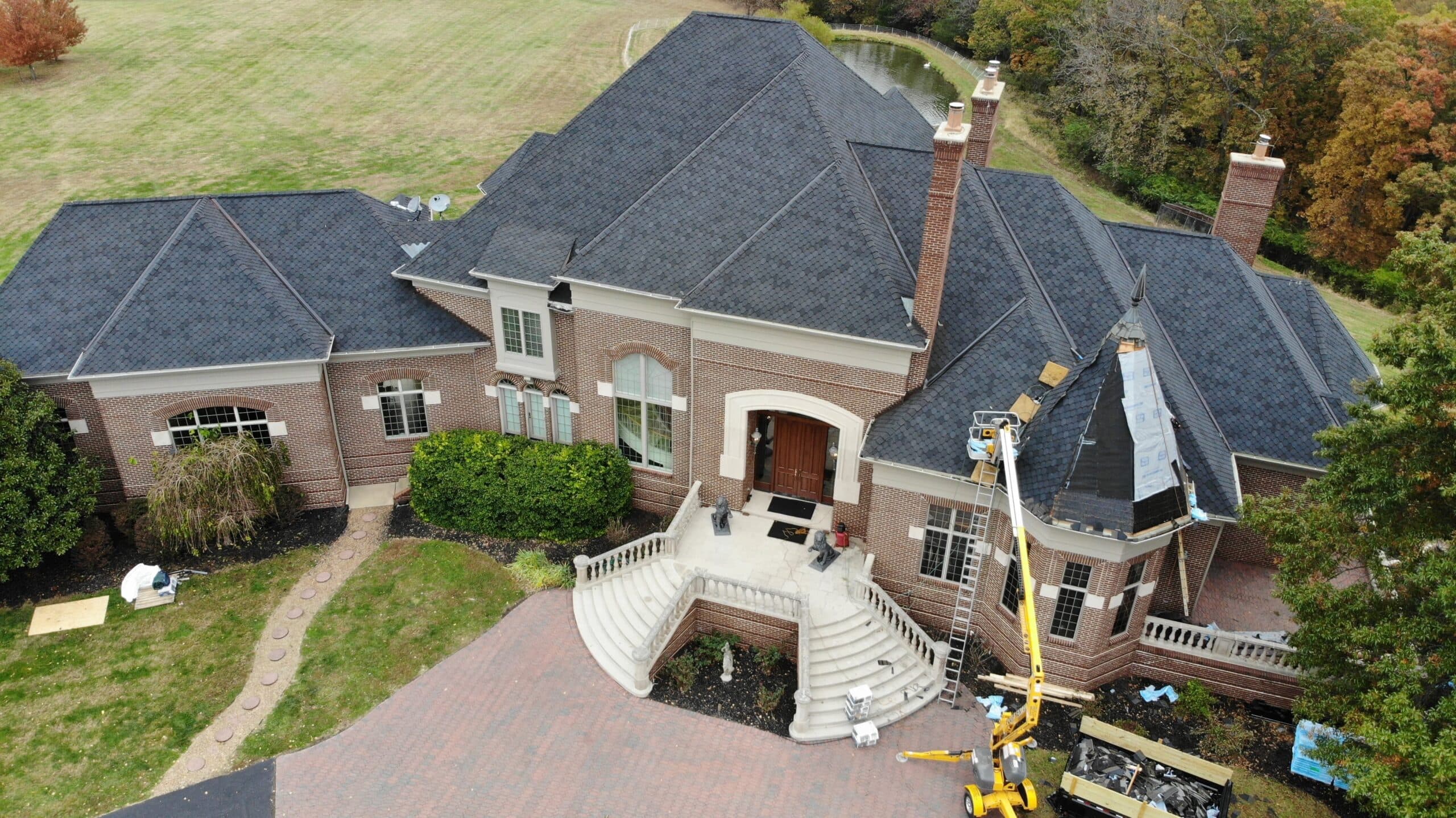
Sustainable Roofing & Siding — Energy Efficiency & Cool Roofing
ENERGY STAR Shingles · Cool TPO · Attic Ventilation · Shingle Recycling
Energy-Smart Choices for St. Louis Homes
A roof replacement is one of the best opportunities to improve a home's energy performance — not through expensive solar add-ons, but through intelligent product selection and installation details that affect how heat enters and exits your home. Revolve offers ENERGY STAR rated shingles, cool roofing options for commercial and residential applications, and proper ventilation systems that work together to reduce cooling loads and extend product life.
We also take waste seriously. Tear-off materials are sorted at our disposal facilities, and asphalt shingles are recyclable — a fact most homeowners and even some contractors don't know.
ENERGY STAR Rated Shingles
ENERGY STAR rated shingles are certified by the EPA to reflect more sunlight than standard shingles, reducing peak roof surface temperatures by up to 50°F and lowering cooling loads for the conditioned space below. In a St. Louis summer — with 90°+ days from June through September — this is a meaningful difference in attic temperature and cooling costs.
Revolve installs ENERGY STAR rated options from all three of our primary residential roofing manufacturers:
Owens Corning TruDefinition Duration Cool Series
Owens Corning Preferred Contractor
The Duration Cool Series uses OC's StreakGuard Algae Resistance technology paired with solar-reflective granules. ENERGY STAR rated, available in several lighter colorways that maximize reflectivity. OC's SureNail Technology installation system remains in place — the Cool designation is a granule upgrade, not a different system.
GAF Timberline HDZ Cool Series
GAF Certified Contractor
GAF's Timberline HDZ in Cool Series colorways uses 3M Scotchgard Technology for algae resistance alongside solar-reflective granules. ENERGY STAR rated. The HDZ system's StrikeZone nailing area and LayerLock technology are unchanged from the standard product.
CertainTeed Landmark Solaris
CertainTeed Select ShingleMaster
CertainTeed's Landmark Solaris is a purpose-built ENERGY STAR rated shingle with high solar reflectance. Available in a range of colorways. Qualifies for CertainTeed's Integrity Roof System warranty program when installed as a complete system.
ENERGY STAR rated roofing products may qualify for utility rebates through Ameren Missouri and Illinois utilities. Check your utility's current rebate schedule — programs change annually.
Cool Roofing for Commercial Buildings
Low-slope commercial roofs present the largest opportunity for reflectivity gains because the entire roof surface is nearly horizontal — directly facing peak solar radiation. Two Revolve-installed systems are particularly effective:
TPO White Membrane
White TPO membranes have solar reflectance values of 0.70–0.80 (70–80% of sunlight reflected) and thermal emittance of 0.88–0.95. Both values exceed ENERGY STAR and California Cool Roof requirements. A black membrane or built-up roof may reach surface temperatures of 160–190°F on a summer day; a white TPO membrane under the same conditions typically stays below 110°F. The impact on cooling equipment runtime is measurable.
TPO roofing systems →White PVC Membrane
PVC single-ply carries reflectance in the same range as white TPO while adding chemical and grease resistance, which is why it is specified over restaurant and food-processing buildings where rooftop exhaust would degrade other membranes. Heat-welded seams and a 50–80 mil thickness range make it the premium reflective option on a low-slope roof.
PVC roofing systems →Attic Ventilation — The Efficiency Foundation
Reflective shingles reduce heat absorption at the roof surface. Proper attic ventilation removes the heat that still accumulates in the attic space, preventing it from radiating down into the conditioned living area. Both matter — and they work together.
IRC requires 1 square foot of net free ventilation area per 150 square feet of attic floor area (or 1:300 with a balanced ridge-soffit system). In practice, many older St. Louis homes are under-ventilated — particularly homes with original gable vents only, or with soffits that have been inadvertently blocked by attic insulation.
On every roof replacement, Revolve verifies the ventilation ratio and installs or upgrades to a continuous ridge vent with soffit intake system where the existing configuration is deficient. A properly ventilated attic running at near-outside-air temperatures is the single most cost-effective passive cooling improvement available on a residential roof replacement.
Asphalt Shingle Recycling
Most homeowners don't know that asphalt shingles are recyclable. According to the Asphalt Roofing Manufacturers Association (ARMA), approximately 10–11 million tons of asphalt shingle waste is generated annually in the US. A significant and growing portion is diverted from landfills through shingle recycling programs.
Recycled asphalt shingles are primarily ground up and used as aggregate in road paving — the asphalt content in old shingles is a valuable binder that reduces the amount of virgin asphalt needed in new pavement. Recycled shingle material is also used in cold patch products and as aggregate in parking lots and driveways.
Recycling availability depends on regional processing infrastructure. In the St. Louis metro, shingle recycling is available through select facilities. Ask your Revolve project manager about recycling options for your tear-off debris — in some cases, sorted tear-off material can be directed to recycling rather than landfill at minimal or no additional cost.
James Hardie — Durability as Sustainability
Sustainability is not only about reflectivity and recycling — product longevity is its own environmental argument. A siding product that lasts 30+ years means fewer tear-outs, fewer landfill loads, and less manufacturing energy over the lifetime of the home.
James Hardie fiber cement siding is made primarily from cement and sand — abundant, low-environmental-impact raw materials — with cellulose fiber reinforcement. The manufacturing process is less energy-intensive than vinyl (PVC) production and produces no hazardous byproducts. James Hardie has invested in manufacturing sustainability including water recycling in production and emissions monitoring.
Fiber cement's resistance to rot, insects, and UV degradation means it maintains structural integrity for decades with minimal maintenance — reducing the resource cost of periodic replacements. The 30-year non-prorated warranty James Hardie provides is backed by a product that genuinely earns that duration.