
Our Roofing Process — 4 Steps from Inspection to Final Walkthrough
Free Drone Inspection · Transparent Estimate · Permits Handled · In-House Crew
Transparent. Documented. Accountable.
Most homeowners hire a roofing contractor once or twice in their lives. The process can feel opaque — contractors come out, hand you a number, and the next time you hear from them is when the crew shows up. At Revolve, we treat every project as an opportunity to demonstrate how the process should work.
This page describes exactly what happens at each stage of a Revolve Construction project, from the first phone call to the day we close out your file. There are four steps. None of them involve guesswork, unbundled surprises, or leaving you to figure out permits or insurance paperwork on your own.
Free Inspection & Drone Survey
Document first. Estimate second.
Every Revolve project starts with a physical inspection — not a drive-by, not a Google Maps screenshot. A project manager walks your property, examines the roof from every accessible angle at grade, and documents granule condition, flashing integrity, valley condition, ridge alignment, soffit and fascia condition, and any visible signs of prior repair work.
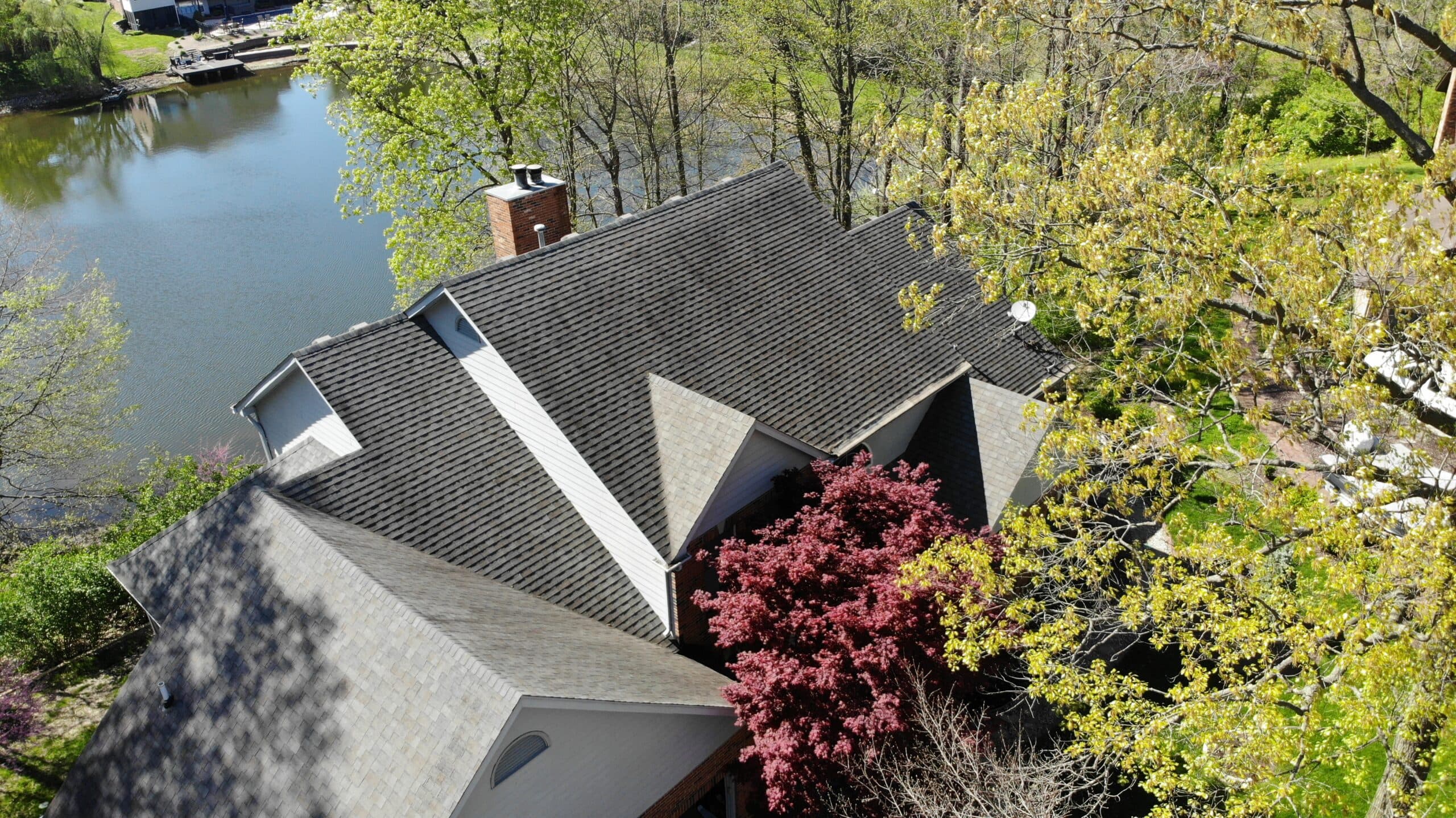
Where safe roof access is warranted, we go up. For most residential projects, we also deploy a drone to capture high-resolution imagery of every roof plane, including ridge, hip, and valley intersections that are difficult to photograph from a ladder. You receive a copy of the inspection documentation — photos and written findings — at no cost and with no obligation.
The inspection protects you as much as it informs our estimate. A contractor who quotes from the ground without documenting existing conditions has no accountability when something unexpected surfaces during tear-off. We document first so there are no surprises later.
Detailed Estimate & Material Selection
Transparent line items. No bundled mystery pricing.
Once the inspection report is complete, we build a written line-item estimate that breaks out every cost component: tear-off labor, dump fees, deck protection, ice and water shield, underlayment, drip edge, starter strip, shingles by square, ridge cap, flashing, ridge ventilation, and any identified deck repair as a conditional item.
We do not bundle everything into a single price. Transparent itemization lets you see exactly what you are paying for — and lets you make informed choices about product upgrades or scope adjustments.
Material selection follows the estimate review. Our project managers are trained on every product line we install — GAF Timberline HDZ, Owens Corning Duration Series, CertainTeed Landmark, and others — and can walk you through shingle color, profile, and warranty tier options. We bring physical samples when helpful. You do not need to make material decisions online from a color chip image.
Permitting & Insurance Coordination
We handle the paperwork — both kinds.
In every jurisdiction where we work, Revolve pulls roofing permits under our contractor registration before work begins. This is not optional — permitted work is inspected work, and inspected work protects your home's resale value and insurance coverage. Permit fees are a transparent line item in your estimate.
For insurance-claim projects, the coordination phase is more involved. We submit our scope and documentation to your carrier's adjuster, attend the adjuster inspection when possible, and prepare supplement packages when the initial approved scope is incomplete. Common supplement items include code-required ice and water shield upgrades, drip edge that meets current IRC requirements, and ventilation corrections required by manufacturer warranty terms.
We also explain ACV vs. RCV coverage — Actual Cash Value vs. Replacement Cost Value — so you understand whether your policy pays depreciation back to you after completion or whether you are responsible for the depreciation holdback. These distinctions matter before you sign a contract, not after.
Installation & Final Walkthrough
In-house crew. Daily cleanup. Documented completion.
Installation day begins with the Revolve crew — not a subcontractor crew — arriving with all materials staged the prior day or morning of. Tear-off follows a systematic section-by-section process designed to minimize the time any portion of your deck is exposed to weather.
Deck boards are inspected as sections are cleared. Any soft spots, delaminated OSB, or failed wood decking is photographed, quantified, and communicated before replacement. New deck protection goes down before the day's work is complete.
Installation follows the full system process for whichever manufacturer's product is specified: correct underlayment type, ice and water shield at eaves and valleys, proper drip edge sequence, correct nail pattern and fastener count per the manufacturer's installation guide. These details are what preserve your warranty eligibility.
Daily cleanup means all torn-off material is loaded into the dump trailer, every nail is rolled with a magnetic nail sweeper, and your driveway and landscaping are left as we found them before the crew leaves each day.
The final walkthrough is conducted by the project manager with you present. We walk the perimeter at grade, review drone photos of the completed roof, confirm all flashing transitions and ridge vent installation, and document the finished state of the project. You receive copies of all documentation as part of project closeout, including the warranty registration confirmation.
What to Expect on Installation Day
A typical full-replacement timeline
- 7:00 – 7:30 AMCrew arrives, stages materials, walks roof with project manager. Brief homeowner check-in to confirm access and any last questions.
- 7:30 – 10:00 AMTear-off begins. Existing shingles and underlayment removed section by section. Decking inspection underway. Any soft spots or damaged boards identified and communicated immediately.
- 10:00 AM – 12:00 PMDeck repairs completed where required. Ice and water shield applied at eaves (typically first 6 feet) and all valleys. Underlayment installed over remaining deck field.
- 12:00 – 1:00 PMDrip edge and starter strip installed. Crew break.
- 1:00 – 4:30 PMShingle installation. All flashing transitions set: step flashing at walls, valley flashing, chimney and pipe boot flashing. Ridge cap and ridge vent installed.
- 4:30 – 5:30 PMFinal cleanup: all debris loaded, magnetic nail sweep of driveway and surrounding areas, jobsite walkthrough. Drone photos taken of completed work. Project manager calls homeowner for final walkthrough scheduling if not present.
Timeline represents a typical single-story 25-square replacement. Multi-story, high-pitch, or complex-geometry roofs will require additional time. Your project manager will confirm the specific schedule for your home.
Process FAQs
How long does a typical residential roof replacement take?
Most standard residential tear-offs and re-roofs in the St. Louis metro are completed in one to two days for a typical 20–35 square roof. Larger homes, steep-pitch roofs, or projects requiring significant deck repair may run two to three days. We provide a project-specific timeline in your estimate.
Do I need to be home during the installation?
You do not need to be home during the work day. We ask that you or a household member be available the morning of day one for a brief walkthrough so we can confirm material placement and access, and available for the final walkthrough at project completion. We keep you updated by phone or text throughout the day.
Who pulls the permit — me or Revolve?
Revolve handles all permit applications in every jurisdiction we work in: St. Louis City, St. Louis County, St. Charles County, Jefferson County, Madison County IL, St. Clair County IL, and individual municipalities. Permits are pulled in your name as the property owner, per standard practice. Permit fees are itemized in your estimate.
What if my insurance adjuster and Revolve's estimate don't match?
Scope discrepancies between contractor estimates and initial adjuster scopes are common and do not mean your claim is denied. We prepare a formal supplement package — including our drone imagery, material quantity takeoffs, and current pricing — and negotiate directly with the insurance carrier. Most supplemented scopes are approved. We handle this at no additional cost to you.
What happens if you find rotted decking during tear-off?
We document every deck board that requires replacement with timestamped photos and flag it before cutting. Deck repair is priced per sheet in your original estimate as a conditional line item. If insurance is involved, deck damage found during tear-off is typically a covered supplement item. You will never receive a surprise invoice for deck work we found and didn't communicate.
Related Pages
- Free Roof InspectionSchedule your free inspection and drone survey with no obligation.
- Storm Damage & Insurance ClaimsHow we document damage, handle adjusters, and supplement incomplete scopes.
- Roofing & Siding WarrantiesThe manufacturer warranty tiers our certified status unlocks for you.
- Licensing, Insurance & BondingVerify our credentials before we step foot on your property.