
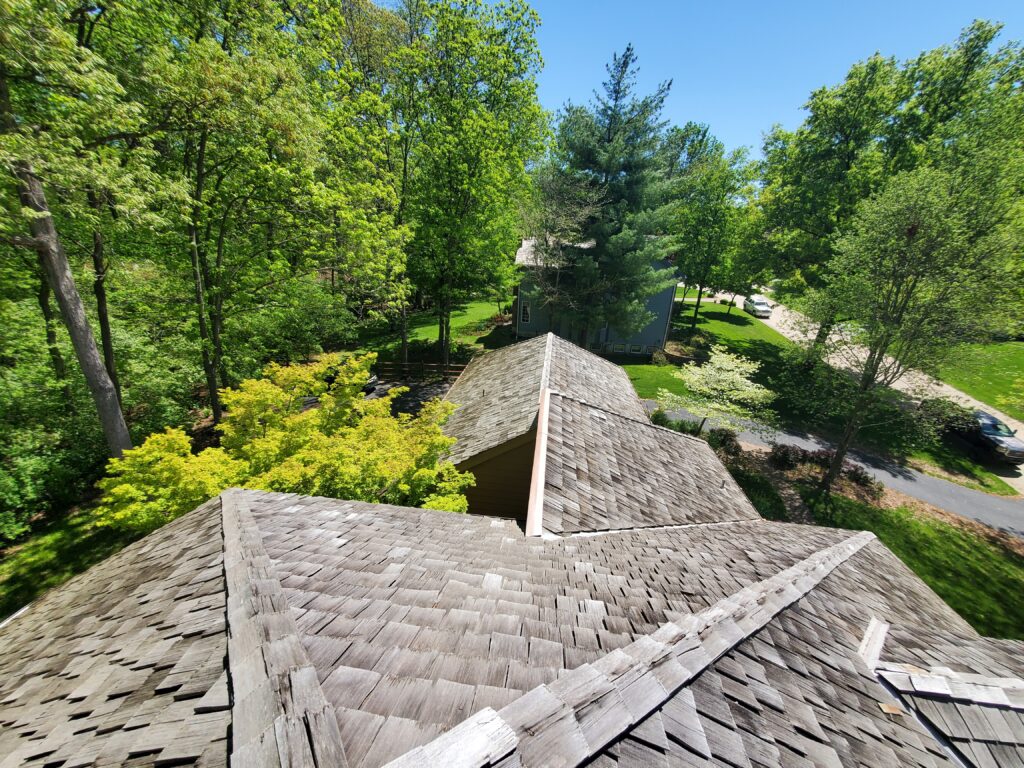
St. Louis roofs work hard. Summer hail, spring wind, winter freeze–thaw, and 100-year-old homes put shingles and flashing to the test. If you’re spotting stains or granules in the gutters, you’re asking the big question: repair or replace? As a St. Louis roofing contractor, here’s how we help homeowners decide—what to check, what’s urgent, and when a full replacement saves money.
Quick links:
- Roof Replacement in St. Louis
- Storm & Hail Damage Repair
- Roof Inspections & Maintenance
A 60-second DIY roof triage (no ladder needed)

A man with hard hat standing on steps inspecting house roof
Start here. If you spot two or more of these from the ground or attic, it’s time to bring in a pro:
- Shingle edges curling or cracking, bald spots where granules are gone.
- Missing shingles or tabs lifted after a recent storm.
- Dark streaks under penetrations (chimneys, vents) or around valleys.
- Attic clues: daylight through boards, damp insulation, rusty nails, musty smell.
- Ceiling/bath fan stains after rain.
- Gutter loads of granules after a storm.
Tip from a roofing contractor St. Louis homeowners trust: After hail or high wind, take 6–8 photos from the ground and in the attic. Time-stamped pics help whether you repair, replace, or file a claim.
How long do roofs last in St. Louis?
Most homes here use asphalt architectural shingles, typically 18–25 years depending on ventilation, attic humidity, and storm exposure. Historic areas may still have slate or clay—these last longer but need specialized care.
Two local realities shorten life spans:
- Storm cycles: In the last 12 months, the metro saw numerous hail reports and severe-weather warnings—that “sandblasting” strips granules and weakens the shingle mat, even if leaks show up months later (NWS St. Louis & event trackers).
- Old housing stock: Many neighborhoods have homes approaching or past 100 years old, so decking, ventilation, and flashing often weren’t designed for today’s weather.
Budget ballpark: A typical ~1,700-sq-ft St. Louis roof replacement averages around $9,000 (as of Aug 2025). Material, pitch, layers, access, and ventilation upgrades move the number up or down. Use this as a planning anchor—not a quote from a St. Louis roofing contractor.
10 signs it’s time to replace your roof
Below, you’ll see what to look for, why it matters, and a quick urgency rating for our climate.
1) The roof is at (or past) its service life
- What you’ll notice: 18–25+ years on asphalt; repeated granular loss; widespread curling.
- Why it matters: Materials get brittle, seals fail, and small leaks find insulation and drywall.
- Urgency: Medium–High. You may buy a season, but patchwork often costs more.
2) Widespread granule loss and curling
- What you’ll notice: Gutters full of “black sand,” shiny bald spots, edges cupping.
- Why it matters: Granules protect asphalt from UV; without them, mats crack quickly.
- Urgency: High when bald spots appear on sunny slopes—usually first to leak.
3) Hail bruises or wind creases after a storm
- What you’ll notice: Round “bruises,” cracked shingle lines, lifted tabs that don’t reseal.
- Why it matters: Bruised mats split over time; creased shingles blow off, exposing underlayment.
- Urgency: High if damage is widespread or near penetrations/valleys.
4) Active leaks, attic stains, or musty odors
- What you’ll notice: Brown ceiling rings, damp sheathing, rusty nail tips.
- Why it matters: Moisture invites mold and hurts insulation R-value; decking can rot.
- Urgency: High. Leaks rarely fix themselves.
5) Sagging roof deck or soft spots
- What you’ll notice: A “wavy” roofline, soft decking, or interior cracks at ceiling/wall joints.
- Why it matters: Structural red flag—could be rotten boards or stressed framing.
- Urgency: High. This needs a licensed St. Louis roofing contractor.
6) Failing flashing at chimneys, skylights, or sidewalls
- What you’ll notice: Loose step flashing, gaps in counter-flashing, caulk where metal should be.
- Why it matters: Temperature swings expand/contract metal; poor details leak.
- Urgency: Medium–High. Localized fixes can buy time; replacement is best on older roofs.
7) Ventilation problems: hot attic, ice dam evidence, or mildew
- What you’ll notice: Oven-hot attic in summer; missing baffles; bath fans venting into the attic; winter icicles and ceiling stains near exterior walls.
- Why it matters: Heat and moisture age shingles from beneath and warp decking; ice dams push meltwater backward.
- Urgency: Medium. Replacement is the moment to right-size intake/exhaust.
8) Multiple repairs, patches, or mismatched shingles
- What you’ll notice: A “quilt” look, tar patches, frequent service calls.
- Why it matters: Spot fixes rarely address system-level issues (ventilation, underlayment, flashing).
- Urgency: Medium–High depending on leak history.
9) Two layers of shingles (or code/insurance conflicts)
- What you’ll notice: Edge shows a thick “sandwich,” past invoices note an overlay.
- Why it matters: Added weight on old framing; hides decking problems; may conflict with best practices or local rules.
- Urgency: High when leaks persist—full tear-off and deck inspection.
10) Slate or clay tile with cracked, slipped, or spalling pieces
- What you’ll notice: Loose slates, broken clay near eaves, stressed fasteners.
- Why it matters: Water under tile ruins underlayment and battens. Historic roofs need specialty work.
- Urgency: Medium–High. Hire a roofing contractor St. Louis homeowners use for slate/clay.
After a storm in STL: what a St. Louis roofing contractor checks in 48 hours
Storms come in clusters here. A calm, document-first approach protects your wallet.
- Photograph each slope, gutters, downspouts, yard hail; add attic/ceiling pics.
- Check nearby homes/vehicles. Neighborhood patterns help insurers understand the event.
- Cover openings with a tarp (we can handle emergency tarping).
- Get a documented inspection from a St. Louis roofing contractor—photos, slope notes, and a clear repair vs. replace call.
- Decide next steps: minor repair, monitor list, or claim. Filing too early without documentation can complicate things; filing too late can, too.
- Keep a log of dates, calls, and photos.
How a St. Louis roofing contractor documents damage
- Overview photos of every slope
- Close-ups of bruises/creases
- Measurements, chalk circles, and test squares
- Notes on ventilation, flashing, and decking condition
Permits & codes: what a roofing contractor St. Louis homeowners should expect
Requirements differ between the City of St. Louis and St. Louis County (and municipalities inside the county). Before you sign, verify:
Quick-check questions for your contractor
- Will this project require a re-roof permit where I live?
- Who pulls the permit (you or the contractor)?
- Will you install ice & water shield at eaves/valleys?
- Are ventilation upgrades included (intake/exhaust/baffles)?
- Will you replace flashing (step/chimney/counter) or re-use it?
- How do you handle multiple layers and decking repairs if we find rot?
- Will you schedule the final inspection, and will I receive permit close-out docs?
Verify rules at the City of St. Louis Building Division and St. Louis County—Residential Building resources. A St. Louis roofing contractor should guide you through both.
Insurance basics for Missouri homeowners (ACV vs. RCV)
Insurance terms can feel like alphabet soup; here’s the plain-English version:
- ACV (Actual Cash Value): Pays today’s value minus depreciation. Often a smaller initial check.
- RCV (Replacement Cost Value): Covers full replacement—usually ACV first, then recoverable depreciation after work is complete.
- Deductible: Your share; ethical firms won’t “waive” it.
- Age matters: Older roofs may have limited coverage or ACV-only terms.
- Documentation wins: Time-stamped photos and a clear scope speed things up.
Learn more with this plain-language explainer on ACV vs. RCV. A roofing contractor St. Louis residents hire regularly can help you prep a clean claim file.
Repair or replace? A simple decision framework
- Repair makes sense when: damage is isolated (one or two slopes), the roof is under ~10–12 years, and ventilation is adequate.
- Replace makes sense when: there’s widespread hail/wind damage, the roof is end of life, you have two layers, or you want to upgrade ventilation/underlayments for long-term health. Selling in 1–3 years? Replacement can improve inspection outcomes and buyer confidence.
When a roofing contractor St. Louis recommends replacement over repair
- Multiple slopes show bruises/creases
- Decking shows rot/sag in several areas
- Flashing is aged across chimneys/sidewalls
- Ventilation is significantly undersized
Mini case study: South City bungalow, big results
The home: 1.5-story brick bungalow, architectural shingles ~20 years old.
Symptoms: Curling shingles on the south slope, ceiling stains near a bath fan, granules after a June storm.
Findings (our inspection): widespread hail bruising on two slopes; undersized intake with the bath fan vented into the attic; aged chimney flashing sealed with caulk.
Plan: Full tear-off and deck inspection, new underlayment with ice & water shield, proper bath fan vent, balanced ventilation (intake + ridge), and new step/counter-flashing at the chimney.
Outcome: Cooler attic, proper ventilation path, and no more stains—plus a transferrable material warranty.
For technical standards we follow, see the Owens Corning steep-slope install guide.
How to compare roofing bids (choosing a roofing contractor St. Louis can trust)
Don’t just compare the bottom line. Make sure each bid spells out the same scope:
- Tear-off of all layers vs. layover
- Underlayments: synthetic felt + ice & water shield at eaves/valleys
- Flashing: new step and chimney counter-flashing (not just caulk)
- Ventilation: intake (soffit/edge) + exhaust (ridge/box) sized to code
- Decking repairs: price per sheet and approval process
- Accessories & cleanup: drip edge, starter, caps, pipe boots; lawn/landscape protection, magnet sweep
- Warranties: material grade + workmanship warranty in writing
- Permits/inspections: who pulls, who schedules final, and how you’ll get the close-out docs
Consider a paid, independent inspection if bids vary widely. An options-first St. Louis roofing contractor will welcome second opinions.
FAQs
Q1: What are the most common signs of roof damage?
Curling or cracked shingles, missing tabs, granules in gutters, attic moisture, and ceiling stains—especially after storms. If two or more show up together, schedule an inspection with a St. Louis roofing contractor.
Q2: Do you charge for estimates, and do I need to be home?
We offer options-first assessments and can start the exterior portion without you. If we need attic access, we’ll coordinate. We always review photos and options with you.
Q3: Does homeowners insurance actually cover roof damage here? What do I do first?
For storm-related damage, many policies do—documentation is key. Take photos, call a reputable roofing contractor St. Louis homeowners recommend, then decide whether to file. We can meet the adjuster on-site.
Q4: Should I file a hail-damage claim right away or wait?
If a pro confirms widespread damage, don’t wait too long; policies have timelines. If damage is minor, we may recommend monitoring and a tune-up instead of a claim.
Q5: What should I look for on my roof after a storm—before I call a contractor?
Check for missing shingles, dented metal (gutters/downspouts), granules at downspout ends, and attic dampness. Photograph everything from safe ground positions.
Q6: Is a spring roof inspection really necessary in Missouri?
Yes. Spring catches winter ice and wind issues early and sets you up before heavy summer storms. A quick inspection often prevents drywall repairs later.
Why St. Louis homeowners choose Revolve Construction
- Local experience. Brick bungalows, 1.5-story homes, historic tile—we’ve seen it all.
- Photo-backed inspections. Clear repair-vs-replace recommendations.
- Options-first approach. If a repair can buy you years, we’ll say so.
- Permit guidance. City vs. County rules made simple.
- Insurance savvy. We help you build a complete claim file.
Ready to talk?
If you’re in St. Louis City, St. Louis County, or nearby communities, Revolve Construction can inspect your roof, explain your options, and—if needed—replace it with a system built for our weather. Call or book your inspection today with a St. Louis roofing contractor you can trust.


